Cracking the Sub-2:45 Code at 50+: A Masterclass in Data-Driven Racing
As a trainer, I often hear that once a runner passes 50, the days of hunting “big” PRs are over. But this year in Barcelona, Dad proved that while the body might change, the mind—armed with the right data—can actually become a more efficient racing machine.This is the story of how we moved from a “standard” sub-3:00 marathoner to a disciplined 2:44:05 performer by learning to “read” the language of effort.
NOTE: After a two-year training journey, Dad achieved a sub-3:00 time in 2024, following a period of more than seven years where he had stopped training after completing an IRONMAN.
The Starting Point Boston: When Pace is a Liar and you ask questions about running

Our journey didn’t start with speed work; it started with fulfilling a dream. Why not try to apply for Boston?
Boston is the oldest marathon, and you only get to take part if you’ve earned it. There’s little chance of “buying” your place. When Dad was young, many years before his 2009 marathon, he bought a book in which the author described the “epic” nature of the Boston Marathon.
We decided to aim for a time of 2:45, knowing that the Boston course was tough and had a complicated profile. The stress of getting on a bus for an hour-long journey, followed by a long wait until the start, would not increase our chances of achieving a good result.
He completed the first half according to plan (2:48), but he experienced an urge to use the toilet, which caused him to lose his rhythm and concentration. The last four kilometres were filled with anxiety while he looked for his family, who would accompany him as he crossed the finish line. This prevented him from achieving that time.
Our athlete ran a 2:51:45 in Boston, but it was a tough experience for Dad and he wasn’t happy with the results.
When a personal best is not enough.
The result in Boston was excellent, but we arrived home feeling like failures. While almost everyone, even the elites, finished a couple of minutes slower than their best time, Dad wasn’t quite satisfied.
He considered quitting running for a while, but when he looked for an entry for the Kuala Lumpur Marathon and discovered it was sold out, he found the Logroño Marathon in October (the same month as KL), which will help us to redeem the disappointment of Boston.
Keep on trying: Logroño International Marathon
Months later in Logroño, he ran nearly the exact same time (2:51:21), but he finished completely shattered .Why? The data told the truth: Logroño was flat but plagued by a brutal headwind (up to 20% air power) . He had to push 11 Watts more power just to match his Boston pace . This was our first big lesson for the amateur runner: Pace tells you what you did, but Power (Watts) tells you what it cost you.
Performance and Physiological Evolution (Boston vs. Logroño Marathons)
Comparing the two marathons reveals a shift toward higher intensity and greater running efficiency, despite the total moving time remaining very similar (2:51:45 vs. 2:51:21),.
However, to fully understand the results and impact of Logroño, let me share some of his first-hand impressions.
Performance and Physiological Evolution (Boston vs. Logroño Marathons)
Comparing the two marathons reveals a shift toward higher intensity and greater running efficiency, despite the total moving time remaining very similar (2:51:45 vs. 2:51:21)
| Key Metric | Boston Marathon (M1) | Logroño Marathon (M2) | Change/Evolution |
|---|---|---|---|
| Moving Time | 2:51:45 | 2:51:21 | Faster by 24 seconds |
| Average Pace | 4:03 /km | 4:00 /km | Faster pace |
| Average Power | 331 W | 342 W | Increased by 11 W |
| Average Heart Rate | 144 bpm | 147 bpm | Higher effort (+3 bpm) |
| Running Stress Score (RSS) | 226 RSS | 258 RSS | Higher stress load (+32 RSS) |
| Ground Contact Time (GCT) | 224 ms | 209 ms | Shorter GCT (-15 ms) |
| Leg Spring Stiffness (LSS) | 10.3 kN/m | 11.7 kN/m | Higher stiffness (+1.4 kN/m) |
| Cadence (Avg.) | 187 spm | 187 spm | Consistent |
| Elevation Gain | 249 m | 195 m | Logroño was flatter terrain |
Wind Factor: Logroño presented a significantly greater challenge, recording an average Air Power of 9 %. Detailed split data confirmed wind resistance peaked as high as 20 % around Kilometer 27, severely degrading efficiency
Performance Impact: Despite running 24 seconds faster than Boston (2:51:21), Logroño required 11 W more power (342 W average) and incurred a 14% higher total stress (258 RSS)
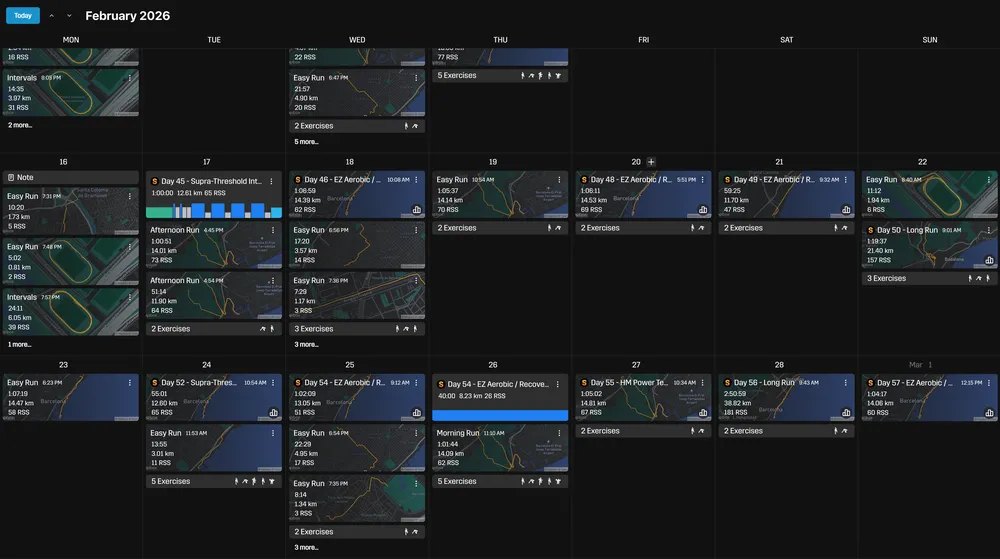
This high external resistance was the primary reason the athlete’s actual finishing time (2:51:21) was approximately six minutes slower than their predicted time (2:45:17) based purely on their physiological Functional Threshold Power (FTL) capability
The sustained effort was exceptionally inefficient due to these environmental factor
‘Logroño is a two-lap course where the 10K and half marathon are run. Only a small percentage run the full marathon, and the course was windy in some spots where you are actually running alone. Even in the final kilometres, an unmarked turn made me run an extra half a kilometre.’
“Besides, the training block was more complicated as our travel to Japan during the summer made training more difficult. We definitely did not feel that we were in better form than before Boston.”
The Strategic Assault: Building the Ceiling
To chase a sub-2:45, we needed to know his “ceiling.” In early 2026, we updated his Critical Power to 371W (After running Santa Coloma’s Half Marathon) Think of this as the maximum “revs” his engine could sustain for about an hour. For a marathon, we calculated he could safely hold about 94% of that power without “blowing up”
We validated this with two “litmus tests”:
- The Windy Half Marathon: He averaged well over 370W (well over his marathon target) at a controlled heart rate of 150 bpm . This proved his aerobic engine was massive.
- The Structured Long Run: He held 346W at a heart rate of just 130 bpm This showed us that his “cruising speed” was becoming remarkably “cheap” for his heart.
Barcelona: The Execution
On March 15th, the plan for Barcelona was simple but aggressive: hold 350W and trust the efficiency Barcelona Analysis.
The plan’s data summary
| Race Metric | 129th Boston Marathon | Logroño Marathon | Barcelona Marathon (Target) |
|---|---|---|---|
| Moving Time | 2:51:45 | 2:51:21 | 2:45:00 (Goal) |
| Elevation Gain | 249 m | 195 m | 134 m (New Data) |
| Average Power | 331 W | 342 W | 340 W – 345 W |
| Pace Achieved/W | 4:03 /km @ 331 W | 4:00 /km @ 342 W | 3:55 /km (Needed) |
Strategic Race Planning Details
The strategy relies on maintaining the power output previously demonstrated at Logroño, but expecting a better pace conversion due to the favorable course profile.
| Metric | Target for 2:45:00 | Strategic Rationale |
|---|---|---|
| Target Pace | 3:55 /km | Required pace for 2:45:00; aligns with FTL projected pace for 340 W. |
| Nominal Power (NP) | 340 W – 345 W | Matches the high power successfully sustained at Logroño (342 W), anticipating greater efficiency on the flatter Barcelona course. |
| Heart Rate (Avg.) | 148 bpm – 152 bpm | Should remain comfortably within the Aerobic Power Zone (143–150 bpm), slightly pushing the upper end closer to the Threshold HR (158 bpm) to sustain the aggressive power target. |
| Pacing Strategy | Even Power Split | Maintain 340 W consistently. This is crucial as the athlete’s most significant physiological strength is their exceptional aerobic endurance and controlled pacing below the Lactate Threshold. Avoiding a severe positive split, as managed successfully at Logroño relative to competitors, will be key to hitting the tight FTL window. |
RACE DAY!
The race was a masterclass in discipline. He opened the first half at a blistering 3:44–3:50/km pace 10. To the casual observer, this looked risky for a 53-year-old. But the data showed he was perfectly within his Aerobic Power zone (<150 bpm), safely under his 158 bpm Lactate Threshold.
Even when the heat rose to 20°C and “cardiac drift” set in—meaning his heart had to beat faster to maintain the same speed—he didn’t panic Barcelona Analysis. Because he had trained his mechanical stiffness (LSS), his form didn’t collapse like it did in Logroño. He surged in the final 500 meters at over 390W to cross the line in 2:44:05.
But things are different on the other side — the side of the person who is using their legs.
I was fully confident that my athletic form would be better than in Logroño, but after running the Santa Coloma half marathon in 1:19, struggling with surges and the wind, and feeling stressed but still within the safe zone, I was almost certain about Mr Gutangs’ bet.
I did less volume, peaking at 120–130 km a week — probably more quality, but I was worried about a late-stage blowout.
I was fully determined to be ambitious, so I started the race faster than ever, despite being afraid of the wind, which was noticeable in Barcelona. I opted for a more aggressive approach to shoe selection, choosing the Asics Metaspeed Edge with a low plate configuration to take advantage of my high cadence (190 spm).
The Trainer’s Final Word
Achieving a 2:44 marathon at age 53 isn’t just about “gritting it out.” it’s about using the massive amount of data on your wrist to stop guessing and start executing. By treating your body like a high-performance engine and your watch like a dashboard, the sub-3:00 journey is just the beginning.
Data doesn’t take the work out of running, but it ensures that every drop of sweat you pour into training actually counts on race day.
The Runner’s Final Thoughts
The race was tough for me. I felt OK, but I knew I was on the knife-edge most of the time. My heart rate was great, and my muscles were working hard, but I didn’t experience any significant pain.
When we passed Colon’s Square and headed towards the Forum/Diagonal Mar, I was worried about the climb towards Jean Nouvel’s tower (Torre Agbar) when we were hit by a strong crosswind.
At that point, I saw the first 4:00 min/km pace on my watch and looked for cover behind other runners, but I was in a fairly exposed position. When we made the turn, the downhill slope helped me go under 4:00 again, and I started planning some contingency plans.
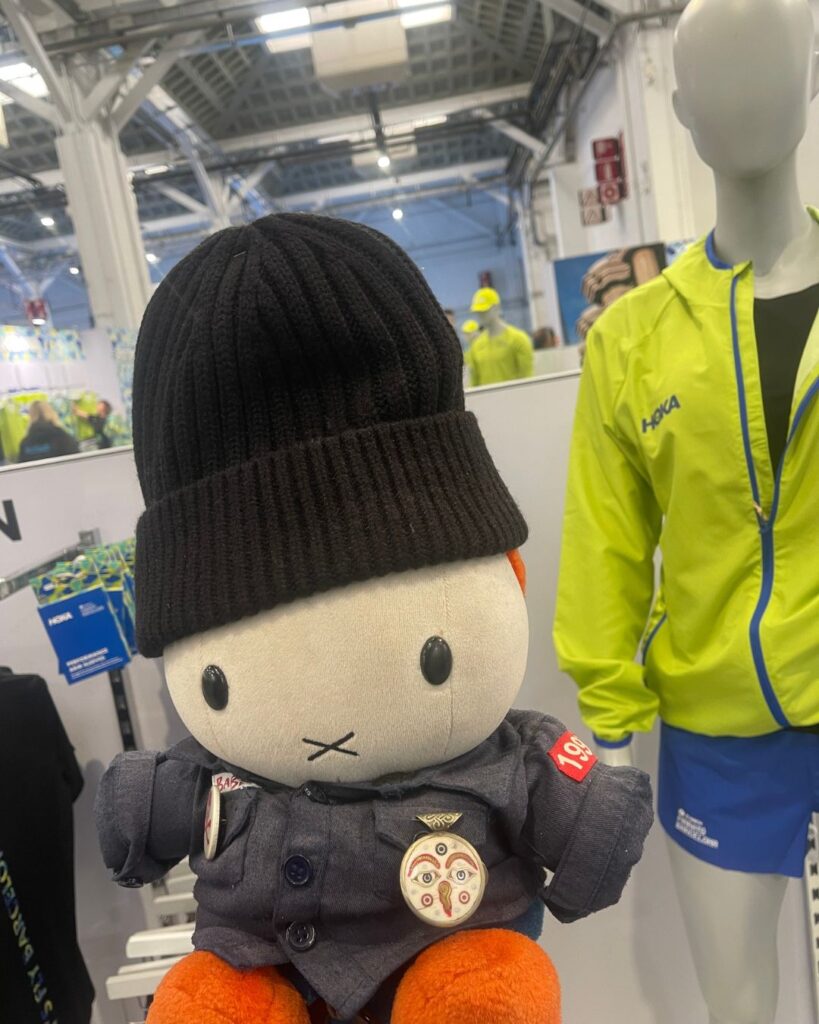
I knew the 1 km uphill stretch on Marina Street would be tough, but I focused on reaching km 40, where my family were waiting for me with Miffa.
I felt like I was melting, but having her in my arms and hearing people call my name made me speed up and accomplish the goal.