
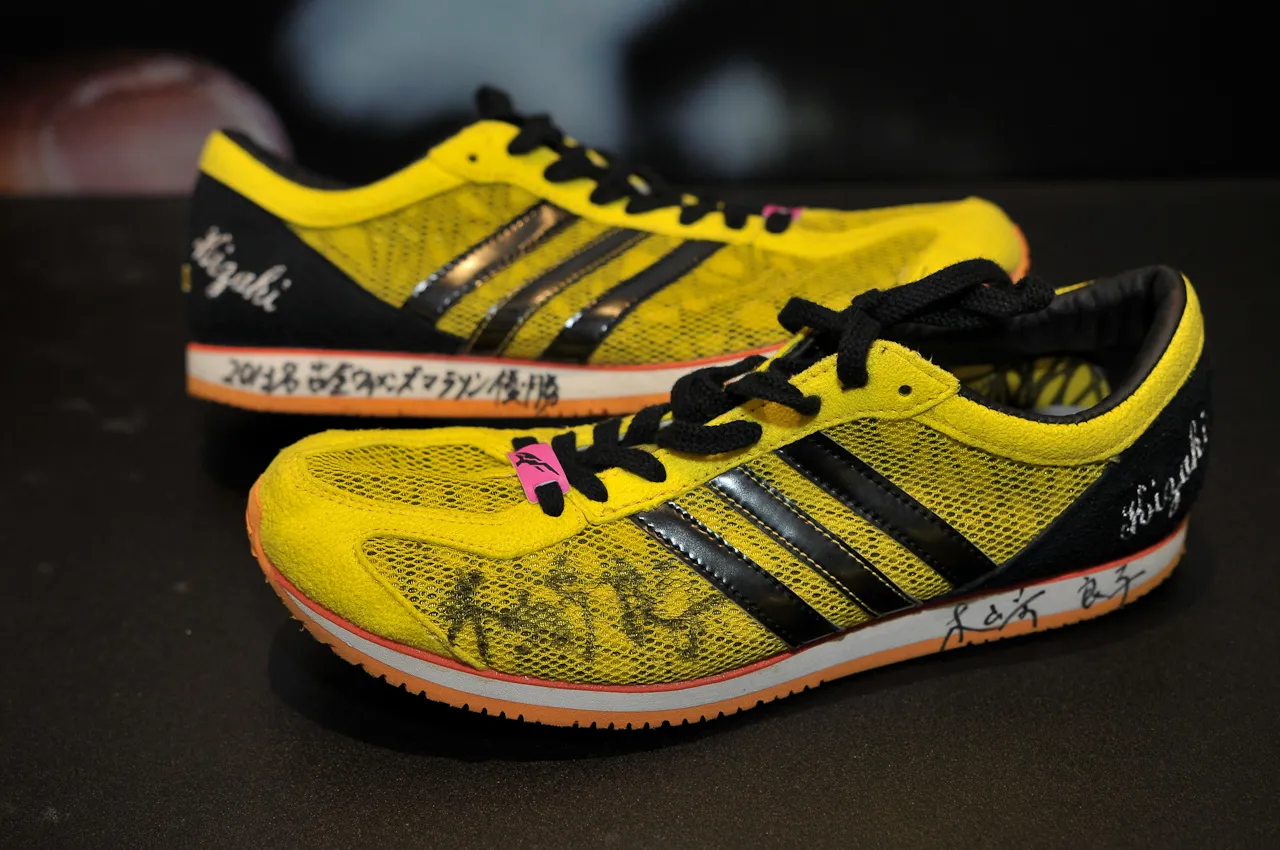
Part I: The Pure Mechanical Connection – The Golden Era of the Racing Flat
Before the era of 40mm stack heights, carbon-fiber plates, and energy-returning super-foams that cushion every stride, marathon running belonged to a different species of athlete and a different philosophy of footwear. It was the era of the racing flat—a shoe stripped of all excess, demanding absolute mechanical responsibility from the human body.
To old-school marathoners, those shoes are held in the same sacred reverence that classic automotive purists reserve for vintage, non-assisted sports cars. Think of an air-cooled Porsche 911 or an early Lotus Seven: no electronic stability control, no power steering, no anti-lock brakes (ABS). Every vibration of the asphalt was transmitted directly through the chassis to the driver’s hands and feet. If you took a corner too fast, it wasn’t a computer that saved you—it was your own instinct, heel-toe technique, and muscle memory.
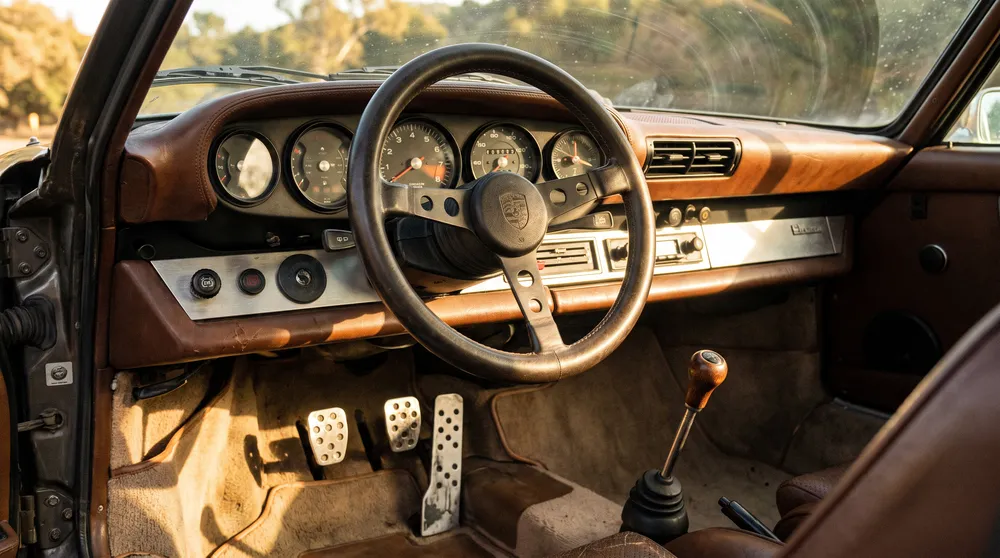
The Analog Racing Philosophy
- No Power Steering
- Manual Gearbox
- Direct Road Feedback
- Minimal Cushioning
- 0% Assistive Carbon
- 100% Muscular Workload
“The machine doesn’t drive for you. You run the machine.”
The original racing flat operated under this exact, unforgiving principle. It offered just enough protection to keep the soles of your feet from bleeding on raw asphalt, leaving 100% of the kinetic workload to the athlete’s muscles, tendons, and biomechanical precision. Your plantar fascia was the spring; your calves were the dampening system; your legs were the engine.
At the absolute summit of this raw, uncompromising era stood one shoe:
the Adidas Adizero Adios 1.
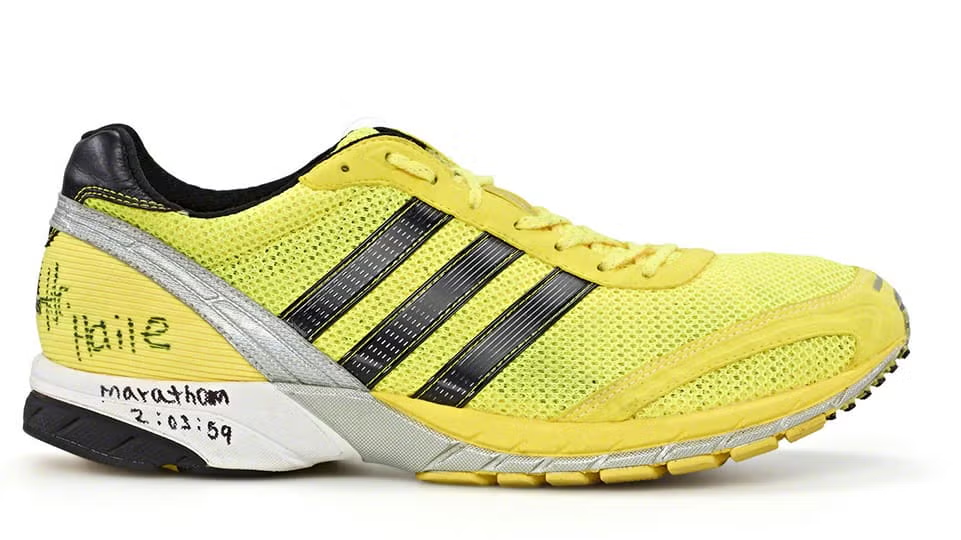
The Master’s Touch: Toshiaki Omori and the “Inside Out” Philosophy
The story of the Adizero line does not begin in a corporate boardroom or a computer-aided design (CAD) lab in Herzogenaurach. It begins in Japan in 2004, inside the workshop of Mr. Toshiaki Omori, a legendary master artisan (shoemaker) whose life’s work was dedicated to crafting the perfect shoe.
Adidas commissioned Omori to rethink performance footwear from the ground up. Omori pioneered a design ethos called “inside out,” where the natural anatomy of the human foot, rather than external structural overlays or digital trends, dictated the architecture of the shoe.
Crafting the Microfit Last (2004–2007)
Refusing computerized, digital-first modeling, Omori spent three years meticulously sculpting physical foot molds—known in shoemaking as lasts—by hand. Using physical casts of real elite athletes’ feet, he carved a streamlined, zero-waste fit that would fit like a second skin. This became known as the “Microfit” last, engineered to eliminate any foot slippage inside the shoe during toe-off.

The “Simplicity” Mandate
In the mid-2000s, running shoe market trends favored heavy structural overlays, thick stability posts, and bulky uppers. Omori rejected all of it. His goal was total reduction: lightweight open-mesh fabrics, thin reinforcement panels, and a low-profile stance that maximized ventilation and ground feel while shedding every unnecessary fraction of a gram.
The Hotel Hallway Sprint: Haile Gebrselassie’s Unscheduled Risk
By September 2008, the prototype of Omori’s vision was ready. On the eve of the Berlin Marathon, Ethiopian running deity Haile Gebrselassie—already a world record holder and multi-time Olympic champion—was presented with an early prototype of the Adizero Adios 1 in his hotel room.
Haile was notoriously particular about his footwear. To test the underfoot feedback and snappy energy response of Omori’s creation, Haile laced up the unreleased prototypes right inside the hotel. He stepped into the long, carpeted corridor and sprinted at full marathon pace up and down the hallway.
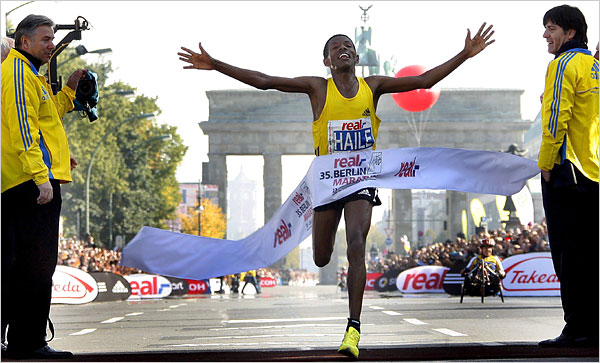
Captivated by the glove-like Microfit feel and immediate ground connectivity, Haile took an unprecedented gamble: he decided to wear a brand-new, untested prototype for a full 42.195-kilometer world-record attempt the very next morning.
The risk paid off in historic fashion. On September 28, 2008, Haile Gebrselassie glided through the streets of Berlin, crossing the finish line in a staggering 2:03:59—shattering his own world record by 29 seconds and becoming the first human in history to break the 2:04 barrier. The golden age of the racing flat had reached its absolute zenith.
💡 To know more about Haile Gebrselassie’s historic 2008 Berlin Marathon run, you can explore the official World Athletics archives.
Technical Blueprint: Original Adizero Adios 1 (2008)
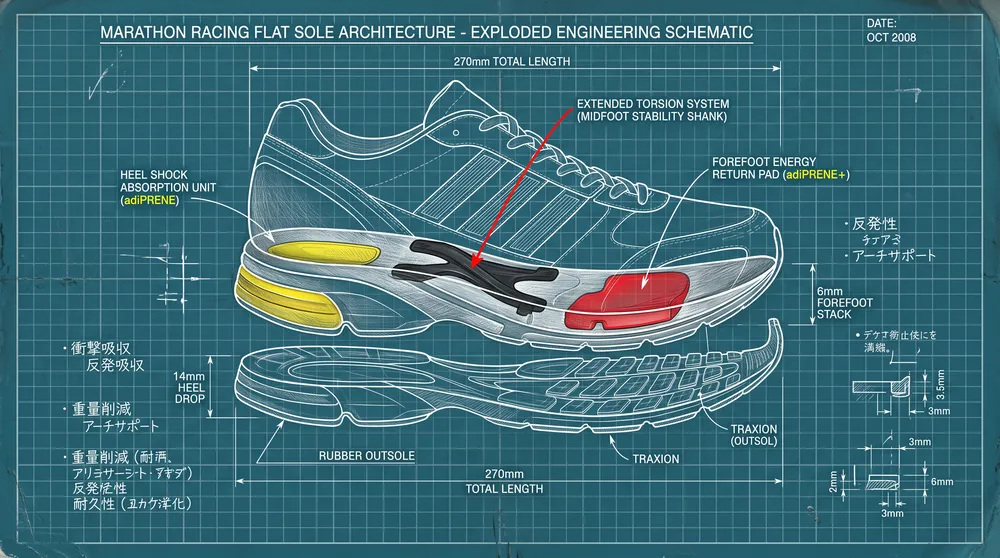
The Adios 1 represents the high-water mark of pre-carbon racing flat engineering. It harmonized a low-slung, responsive geometry with precise vibration dampening.
| Technical Feature | Specification & Mechanical Function |
|---|---|
| Weight | ~210 grams (7.4 oz) – remarkably light for a full marathon racer in 2008. |
| Midsole Base Foam | Compression-Molded EVA (CMEVA) offering direct road feedback and high durability. |
| Forefoot Cushioning | adiPRENE+: A high-resilience, springy compound embedded under the metatarsals to store and return forefoot energy during toe-off. |
| Heel Cushioning | adiPRENE: A soft, shock-absorbing impact insert positioned directly beneath the calcaneus to dampen heel-strike forces. |
| Midfoot Stability | Extended TORSION® System: A lightweight, engineered plastic shank bridging the heel and forefoot, preventing twisting while snappily guiding the gait cycle. |
| Upper Construction | Ultra-porous, wide-open mesh paired with micro-suede synthetic overlays, locking the midfoot without restricting breathability. |
Evolution of the Platform: Adios 1 vs. Adios 2
Following Haile’s victory, Adidas sought to refine the platform for broader global durability while preserving its elite performance edge. The release of the Adizero Adios 2 in 2012 brought several key upgrades:
| Feature / Material | Original Adizero Adios 1 (2008) | Adizero Adios 2 (2012) |
|---|---|---|
| Outsole Traction | Dual-layer blown rubber with hard rubber traction nubs. | Upgraded to high-performance Continental™ Rubber for elite wet/dry grip. |
| Forefoot Traction | Standard rubber traction nubs. | Quickstrike (DSP) micro-tubs molded onto a textile base, shaving weight and sharpening push-off grip. |
| Upper Construction | Ultra-breathable, wide open-cell mesh. | Eco-friendly Sprintweb micro-mesh, reducing upper stretch over long distances. |
| Midfoot Geometry | Standard flat racing profile. | Sculpted narrower through the arch to accentuate the “Microfit” wrap. |
(Note: In 2013, the line underwent a dramatic mechanical shift with the Adios 3, which dropped traditional CMEVA and adiPRENE entirely to introduce TPU-based Boost cushioning, setting off the next step toward modern footwear.)
Part II: The Re-Edition Backlash – Corporate Nostalgia vs. Sacred Heritage
Fast forward to recent years. In an era dominated by oversized carbon “super shoes,” a growing movement of veteran runners, shoe collectors, and running purists began hungering for the tactile simplicity of the past. Forums like LetsRun, Reddit’s r/Running, and specialized footwear communities were filled with threads reminiscing about the crisp, raw feel of the original Adizero Adios 1.
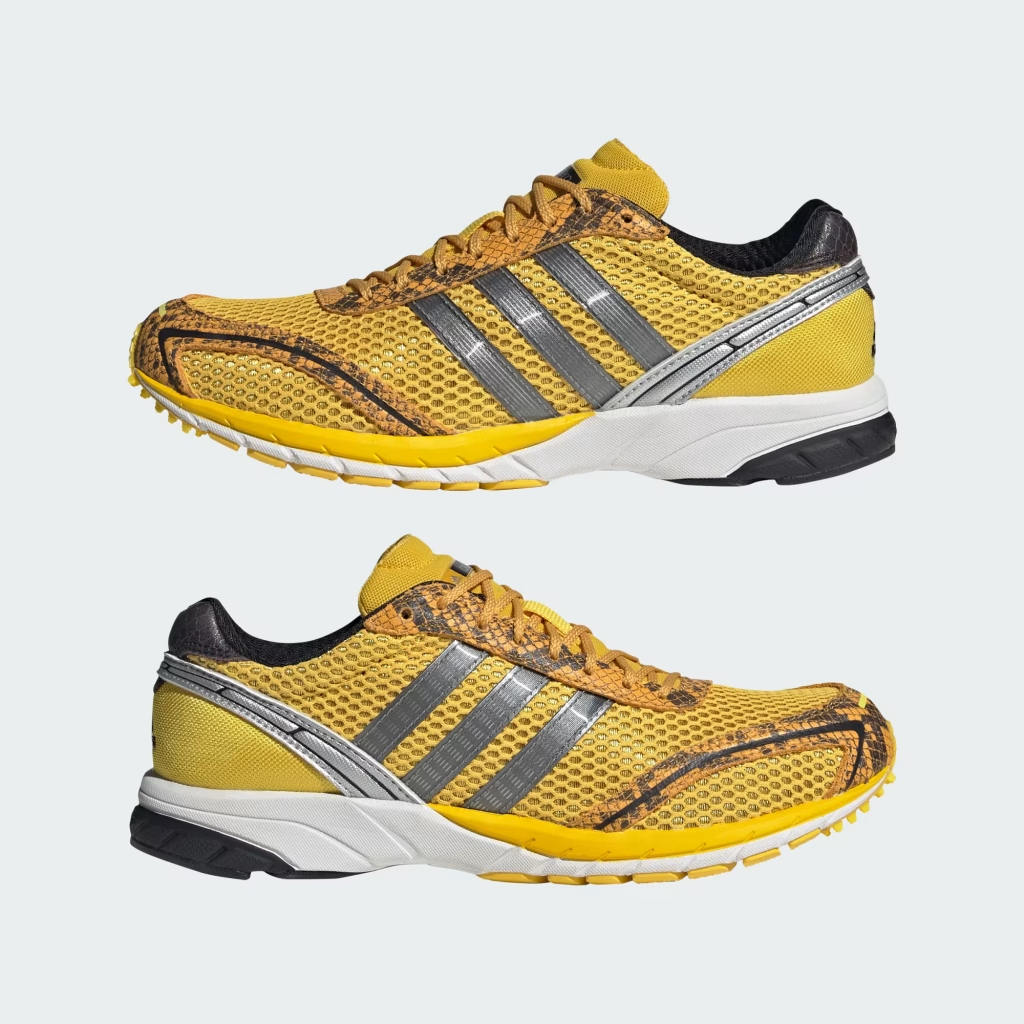
When rumors began circulating that Adidas was preparing a special Adizero Adios 1 OG Retro Re-Edition, the collective hype was immense. Veterans envisioned lacing up Omori’s masterpiece once more—whether for fast track workouts, 5K road races, or simply to own a piece of pure running history.
✔ Purist Expectation
- Original CMEVA / adiPRENE midsole
- Featherlight porous race mesh
- Handcrafted Microfit precision
- Pure 2008 racing flat performance
✖ Corporate Execution
- Cheap synthetic plastic materials
- Re-routed to lifestyle fashion line
- Faux suede & crocodile textures
- Quick corporate cash-grab
From Anticipation to Outrage
However, the moment the physical re-release hit retailer shelves and unboxing videos appeared, the initial excitement transformed into widespread irritation, mockery, and outright backlash across athletic and sneaker communities.
Adidas had not faithfully reproduced Omori’s performance racing flat. Instead, the brand routed the iconic silhouette through its Originals / Lifestyle division. The sacred marathon shoe was re-engineered as a cheap, casual fashion sneaker:
- Subpar, Cheapened Materials: Rather than recreating the featherlight, porous performance mesh and technical synthetic suede that made the 2008 shoe legendary, Adidas substituted cheap synthetic textiles, plastic-feeling overlays, and even bizarre lifestyle materials like faux crocodile print and faux pony hair.
- Gutted Underfoot Tech: The crisp, responsive firmness of the original CMEVA unit paired with genuine adiPRENE/adiPRENE+ inserts was replaced with lifeless, low-grade foam inserts meant strictly for casual walking, not hard running.
- Weight and Fit Failures: The famous “Microfit” precision carved by Omori’s own hands was compromised. The re-edition felt clunky, ill-fitting, and lacked the glove-like, zero-slip containment that Haile Gebrselassie relied on in Berlin.
A Betrayal of Heritage
For the community of runners who view the Adizero Adios 1 with the same reverence a car collector views a classic 1960s Ferrari, the release felt like a slap in the face.
“They took a legendary piece of marathon history—the shoe that broke 2:04—and stripped its soul away just to sell a cheap plastic street shoe to people who don’t even run.”
The consensus was clear: Adidas had chosen quick corporate profits and casual fashion trends over athletic integrity. Rather than respecting the shoe’s identity as the ultimate racing flat, they commodified its silhouette, leaving purists feeling betrayed by a brand that seemed to have forgotten its own competitive heritage.
LetsRun.com Message Board
Thread Title: Did Adidas really just ruin the OG Adizero Adios 1 for a cheap lifestyle retro?!
=========================================================================FORUM THREAD: LetsRun.com > Shoes & Gear Title: Did Adidas really just ruin the OG Adizero Adios 1 for a cheap lifestyle retro?! Started by: TrackMinded_88 | Posted: 3 days ago =========================================================================
[TrackMinded_88] Just saw the photos of the “Adizero Adios 1 OG” re-release. I was so excited when I heard rumors about this last year thinking we were getting Omori’s 2008 racing flat back. Instead, Adidas Originals turned it into a fashion sneaker with plastic overlays and lifestyle foam. Zero adiPRENE+, no performance mesh, and it weighs a ton. Haile ran 2:03:59 in these! Why treat an iconic marathon shoe like a cheap Stan Smith derivative? Anyone else furious about this?
——————————————————————————– ————–
REPLIES: [Sub3_or_Die] “Marketing department strikes again. They took the shoe that defined the pre-carbon era and turned it into a mall shoe. Complete disrespect to Omori’s Microfit last.” [OldSchoolFlatRunner] “Classic corporate greed. They know veteran runners hold the 2008 Berlin shoe in high esteem, so they copy the silhouette in cheap materials to make a quick buck from casual wearers who don’t even know who Haile is.” =========================================================================
Conclusion: The Unconquerable Legacy of 2008
While the recent casual re-edition missed the mark for true running enthusiasts, it inadvertently proved a broader point: you cannot fake authentic performance engineering.
The original 2008 Adidas Adizero Adios 1 remains a monument to a lost age. It stands as a tribute to Toshiaki Omori’s artisan hands, to Haile Gebrselassie’s courage in a Berlin hotel hallway, and to an era when fast times were carved out by light rubber, thin mesh, and pure human strength.
Super-shoes may have taken over the record books, but in the hearts of marathon purists, nothing will ever match the raw, unassisted roar of the classic racing flat.
🔗 Want to Know More?
- Check out Reddit’s r/Running community to discuss classic racing flats versus modern super-shoes.
- Explore Adidas’ current Adizero Performance lineup to see how modern marathon shoes have evolved since 2008.