
Introduction: The Smells of Marquès de l’Argentera
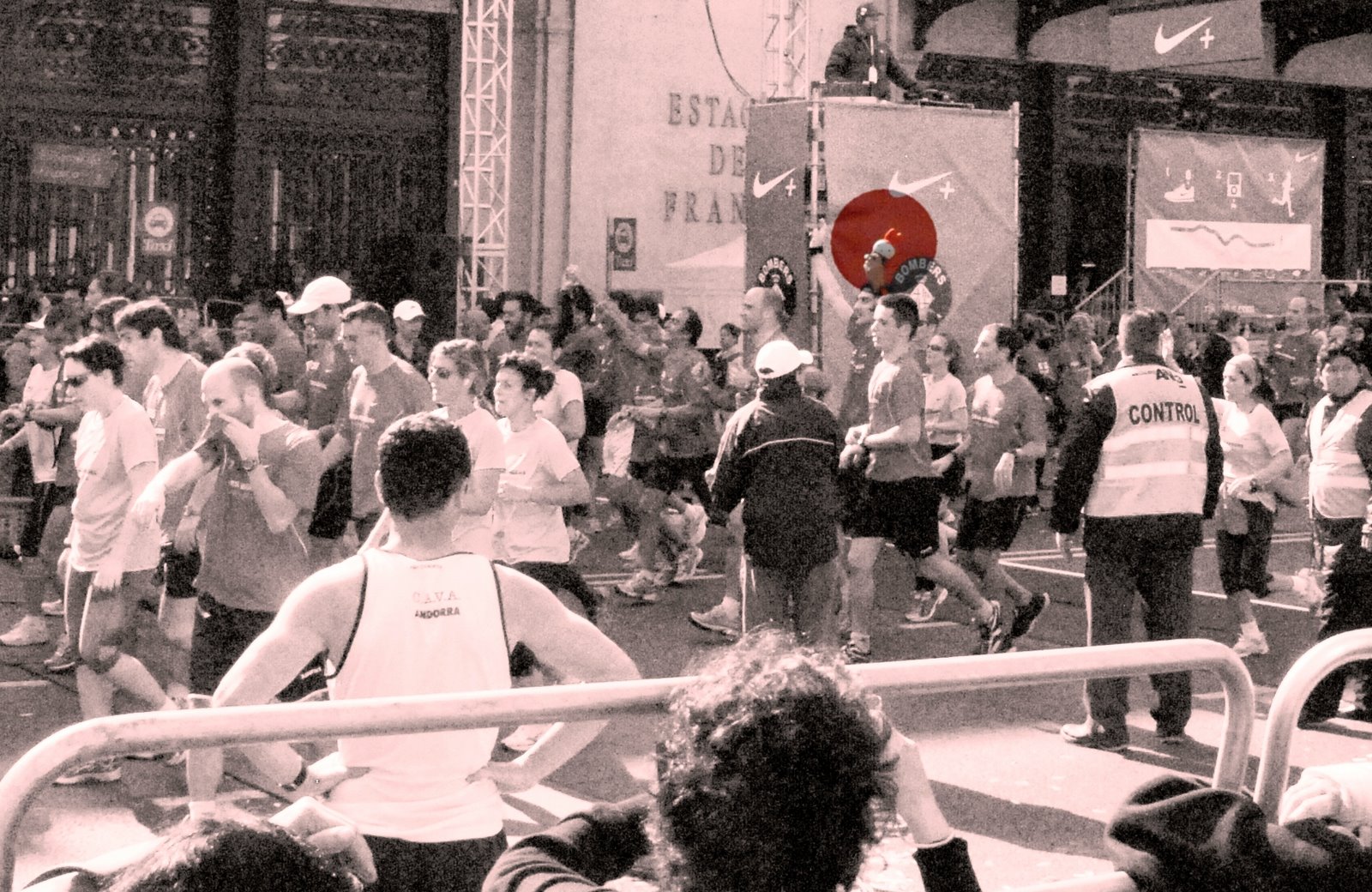
If you close your eyes and ask a veteran Barcelona runner what April 2008 smelled like, they won’t tell you about Mediterranean sea breeze or spring blossoms. They will tell you it smelled like camphor rub, stale diesel from the Estació de França, and 15,000 wet Nike Dri-FIT shirts warming up under the morning sun.
It was April 2008. Avinguda Marquès de l’Argentera was not a street; it was a sea of fiery red NIKE running t-shirts.
The Architecture of an Era (2008)
- Timing Tech: Yellow plastic ChampionChip transponder tied to shoe laces with twist-ties
- Footwear: Minimalist CMEVA Racing Flats (Adidas Adizero Adios 1, Nike Streak)
- Digital Culture: Personal blogs (Blogger, WordPress, early Web 2.0 diaries)
- Attire: The iconic flame-orange Nike Dri-FIT “Cursa de Bombers” shirt with printed chest bib
Among that human wall stood a runner in his early 30s. He had taken up running a few years prior, mid-2000s, when slipping on a pair of running shoes still felt like a slightly eccentric personal hobby rather than a lifestyle identity. He was aiming for a modest, hard-fought 50-minute 10K.
Eighteen years later, that same runner is over 50 years old. Through two decades of unyielding consistency, he has done what biomechanics says shouldn’t happen: he aged, but he got significantly faster, eventually carving his 10K personal best down.
Yet, as he stands on the asphalt today, surrounded by carbon-plated super-shoes, aesthetic coffee-run crews, and runners live-streaming their warm-ups to TikTok, he feels like an alien in the sport he gave his youth to.
To understand how we got here, we have to look back at the masterclass of guerrilla marketing, city politics, and corporate audacity that made Nike’s Cursa de Bombers the defining race of a generation.
Part I: The Hidden Forces – How Nike Hijacked Barcelona’s Asphalt
To the 15,000 runners choking the start line in 2008, the Cursa de Bombers (the Firefighters’ Race) felt like a spontaneous explosion of urban youth culture. In reality, it was one of the most brilliant, subversive corporate guerrilla operations in modern sports marketing history.
The first race took place in 1999 with more than 3000 runners. The winner did 28′ 24 ”.
The 1999 Guerrilla Origin of Cursa de Bombers
Blocked new street race permits due to Adidas monopoly and traffic concerns.
Wanted a major Barcelona footprint; backed the firefighters to bypass municipal bans.
On labor strike for better wages; leveraged civic sympathy to force city permit approval.
The Unholy Alliance: Sandro Rosell and the Firefighters’ Strike
In the late 1990s, Adidas held an ironclad monopoly over urban road races in Barcelona. The City Council (Ajuntament de Barcelona) refused to grant permits for any new mass-participation races, declaring that shutting down city traffic on a Sunday morning for a corporate brand was out of the question.
Enter Sandro Rosell, then head of Nike Iberia’s marketing department. Rosell wanted Nike to own Barcelona’s asphalt, but the front door was locked. So he looked for a backdoor.
He found it in the Bombers de Barcelona (the official city fire brigade), who were embroiled in a bitter, high-profile labor conflict with the City Council over wages and hazardous working conditions.
Nike struck a deal with the fire brigade union: Nike would fully fund and organize a world-class 10K race, but the race would bear the official name and emblem of the Bombers de Barcelona. The City Council, terrified of the public relations disaster of refusing a permit to the city’s heroic, underpaid firefighters, was forced to sign off.
The “Anti-Marketing” Masterclass
Once the permit was secured, Nike didn’t launch a standard promotional campaign. They launched a counter-culture rebellion.
Nike plastered Barcelona’s metro stations and walls with subversive, “anti-marketing” slogans designed to poke fun at conventional sports advertising:
- “If you think running will make you happy, forget it.”
- “If you think running will turn you into an idiot, absolutely.”
- “Run with the firefighters? Why?”
- “We should boycott this race!”
The psychology was genius. By mock-boycotting their own event, Nike made running feel rebellious, urban, and raw. They turned a 10K road race into the city’s premier youth festival.
Part II: The 2008 Peak – Red Shirts, Yellow Chips, and the 50-Minute Grunt
By 2008, the Cursa de Bombers had reached its absolute cultural peak. Nike had transformed the 10-kilometer route—from Marquès de l’Argentera, up Passeig de Colom, sweeping up Gran Via, and delivering a roaring downhill plunge through Via Laietana—into a temple of speed.
It was the era of the Orange / RED Dri-FIT technical shirt (then red and others). Nike didn’t just hand out souvenir tees; they made wearing the official neon-orange shirt mandatory, printing the runner’s bib number directly onto the fabric of the chest. On race morning, 15,000 runners merged into a single, pulsating orange tide flowing through the Gothic Quarter.
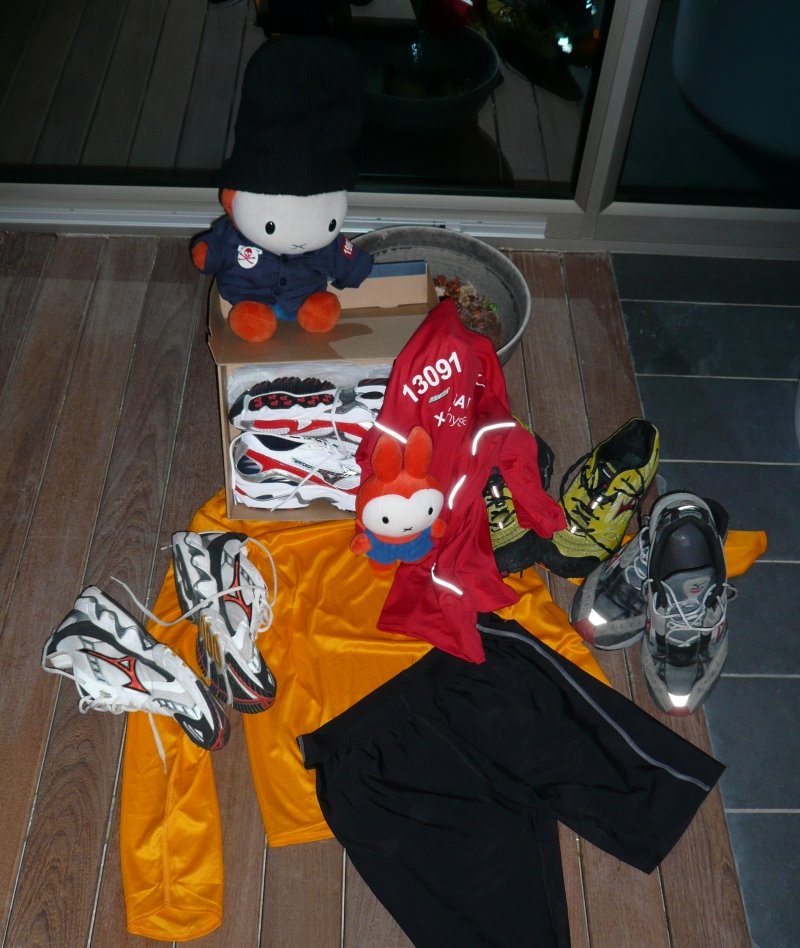
📖 From the Archives: A Runner’s Diary (April 2008)
“Km 1 to 3 was absolute warfare. 15,000 people crammed onto Marquès de l’Argentera. I lost 45 seconds just trying not to trip over yellow ChampionChips tied to people’s shoelaces. People weaving, elbows flying, total chaos.”
“But when we turned onto Gran Via and the DJ truck hit us with Chemical Brothers, the whole city vibrated. I pushed past the 5K mark at 25:10. My calves felt like glass. No cushion, no assistance—just my old flats beating against the asphalt.”
“Came down Via Laietana flying. Crossed the line in 50:04. Missed the 49-minute barrier by four seconds! My legs are destroyed, but what a race. Nothing compares to Bombers.”
— Inspired by personal running blogs of the era (View original 2008 blog reference)
That was the heart of the 2008 running boom: raw, unglamorous, self-inflicted suffering. You trained in heavy trainers, raced in wafer-thin flats (if you were any good), logged your times on basic web logs (actually excel) , and measured success by whether you broke 50, 45, or 40 minutes through sheer grit.
Part III: From 50 Minutes to 35 Minutes – The Paradox of the Second Running Boom
Fast forward 18 years. Through nearly two decades of consistency, our runner mastered lactate threshold pacing, periodization, and recovery. His body adapted. His times dropped year after year: 45:00… 40:44… 37:20… until finally, he clocked a blistering 35:50 on a certified 10K course.
Physically, may be he is in the top 1% of his age category. Mechanically, he has better tuned engine. Yet, when he steps out onto the streets of Barcelona today for a weekend run, he feels profoundly disconnected from what running has become.
| Dimension | 2008 “First Boom” | Modern “Second Boom” |
|---|---|---|
| Race Fuel & Tech | Water cups & yellow plastic ankle chips | Hydrogel packs, continuous glucose monitors & Strava Live |
| Footwear Tech | 180g low-profile racing flats (0% carbon assist) | 40mm carbon-plated super-shoes ($300+) |
| Community Ethos | Suffering, solitude, and amateur road racing | Curated “Run Crews”, social fashion & coffee jogs |
| Cultural Vibe | Raw urban guerrilla rebellion | Aesthetic Instagram reels & lifestyle branding |
Standing at the start line of a modern 10K, our 50-year-old veteran looks around: beginners running 65-minute 10Ks wear $300 carbon super-shoes that bounce like trampolines. “Run Crews” glide through Ciutadella park with matching pastel clothing and selfie-sticks, pausing mid-workout to record social content.
To the modern runner, running is a lifestyle accessory—an aesthetic blend of wellness, fashion, and digital community. To the 50-year-old veteran who remembers the orange / Red tide of 2008, running was an analog contest between your lungs and the asphalt.
Conclusion: What Remains When the Hype Clears
There is a quiet irony in his story. In 2008, running 50 minutes among 15,000 sweating bodies felt like being part of something immense, authentic, and groundbreaking. Today, running much faster —a time that requires monastic discipline—makes him a ghost drifting through a sea of influencers.
Nike’s Cursa de Bombers of 2008 proved that a sports brand could capture the soul of a city if it respected the raw, rebellious energy of the street. It wasn’t about looking good on a phone screen; it was about the collective thunder of thousands of shoes descending Via Laietana toward the sea.
Now Cursa de Bombers is sponsored by Vueling and Sport Specialist Decathlon who invited Dad in 2024 and 2025. In 2024 he paced the fastest penguin to ever run the race with 38 minutes and change and in 2025 he was in the 37 min pacers group. The race has changed but still you can feel the energy of the old one when going down Via Laietana.

“A pair of thin shoes, a yellow chip twist-tied to your laces, 10 kilometers of flat asphalt, and the willingness to suffer.”
🔗 References & Further Reading:
- Explore the history and historical results of Barcelona’s official Cursa de Bombers archive.
- Read deep tactical breakdowns and route reviews of Barcelona 10Ks on Blogmaldito’s race guides.
- Browse original 2008 runner personal diaries on miffaisno1 blog archives.
- Discuss veteran training strategies and retro running history on the LetsRun Message Board.
Epilogue – when you try to re-invent the wheel-
The 2015 “We Run Barcelona” Experiment Backlash
In 2015, Nike attempted to completely reinvent the event to align it with their global branding strategy. They rebranded the race as “We Run BCN”, slashed the capacity from 27,000 to around 20,000 runners, shifted the date from its traditional spring slot to a hot Friday night in June, and radically altered the classic, fast-paced route.
This “show and spectacle” approach caused scheduling friction with the city, and the running community met the changes with significant backlash. The event lost its core local identity as a runner-first event heavily focused on the local firefighters.